The Cholesterol-Free Trap: Are You Secretly Gaining Fat Without Knowing It?
Walk into any supermarket and you’ll see oil bottles proudly labelled “Cholesterol-Free.”
Sounds healthy, right? Many people assume it means fat-free – but that’s one of the biggest food myths out there.
This week, let’s clear the confusion and understand what these labels really mean for your heart and health.
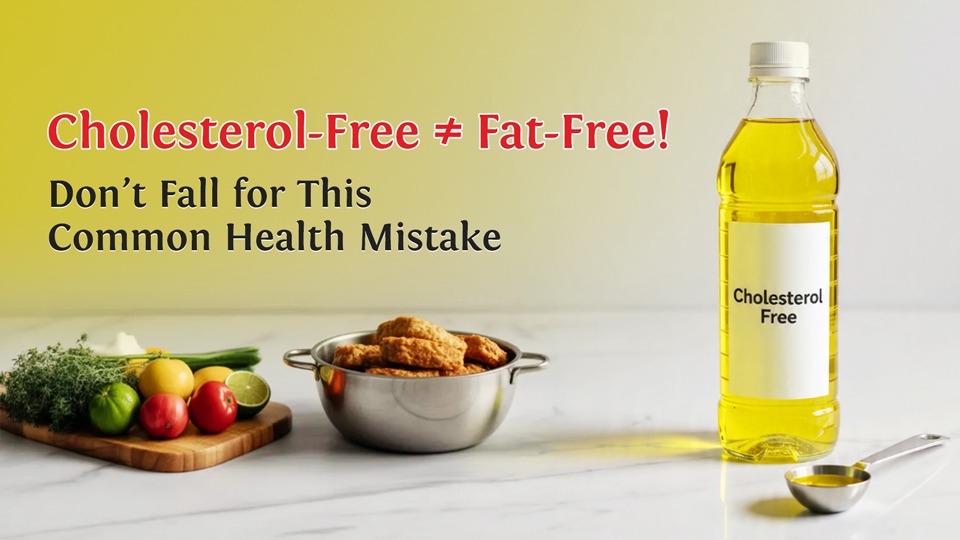
Cholesterol-Free ≠ Fat-Free
Cholesterol is a type of fat found only in animal-based foods like meat, ghee, butter, and full-fat dairy.
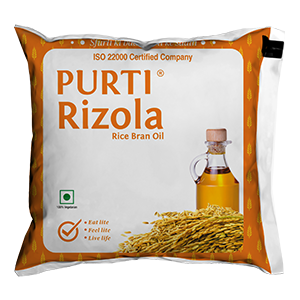
In contrast, vegetable oils – such as mustard, sunflower, soybean, and rice bran – are naturally cholesterol-free because they come from plants.
But here’s the catch:
Oils are 100% fat, even if they don’t contain cholesterol.
So, “cholesterol-free” doesn’t mean fat-free or calorie-free.
Why This Difference Matters
If you pour too much oil, thinking “it’s cholesterol-free, so it’s healthy,” you might still:
What About Traditional Fats?
Not all fats are bad – it’s about how much and what kind you use.
Ghee & Butter: Contain saturated fat and cholesterol, since they’re animal-based. They add great flavour but should be used in moderation.
Coconut Oil: Stable for cooking and adds aroma, but also high in saturated fat – use sparingly.
The smart approach?
Balance traditional fats with cholesterol-free vegetable oils for everyday cooking.
How to Make Smarter Choices
Here’s how to use oils wisely without giving up taste or health:
Tip of the Week
“Cholesterol-free doesn’t mean free to pour. Fat is still fat – so measure wisely.”
Coming Up Next Week
“Your Oil vs. Your Lifestyle – How They’re Connected”
Stay tuned to learn how your daily cooking choices reflect your heart health.
Don’t Miss This Video: https://youtu.be/J8wkNatr0KA
Our commitment to quality is supported by the state-of-art infrastructure, its relationship with the buyers and modern production facilities.
Our Company pursues a single goal - completely focussed on th quality of the product.
© copyright, Purti Vanaspati Pvt. Ltd. All Rights Reserved.