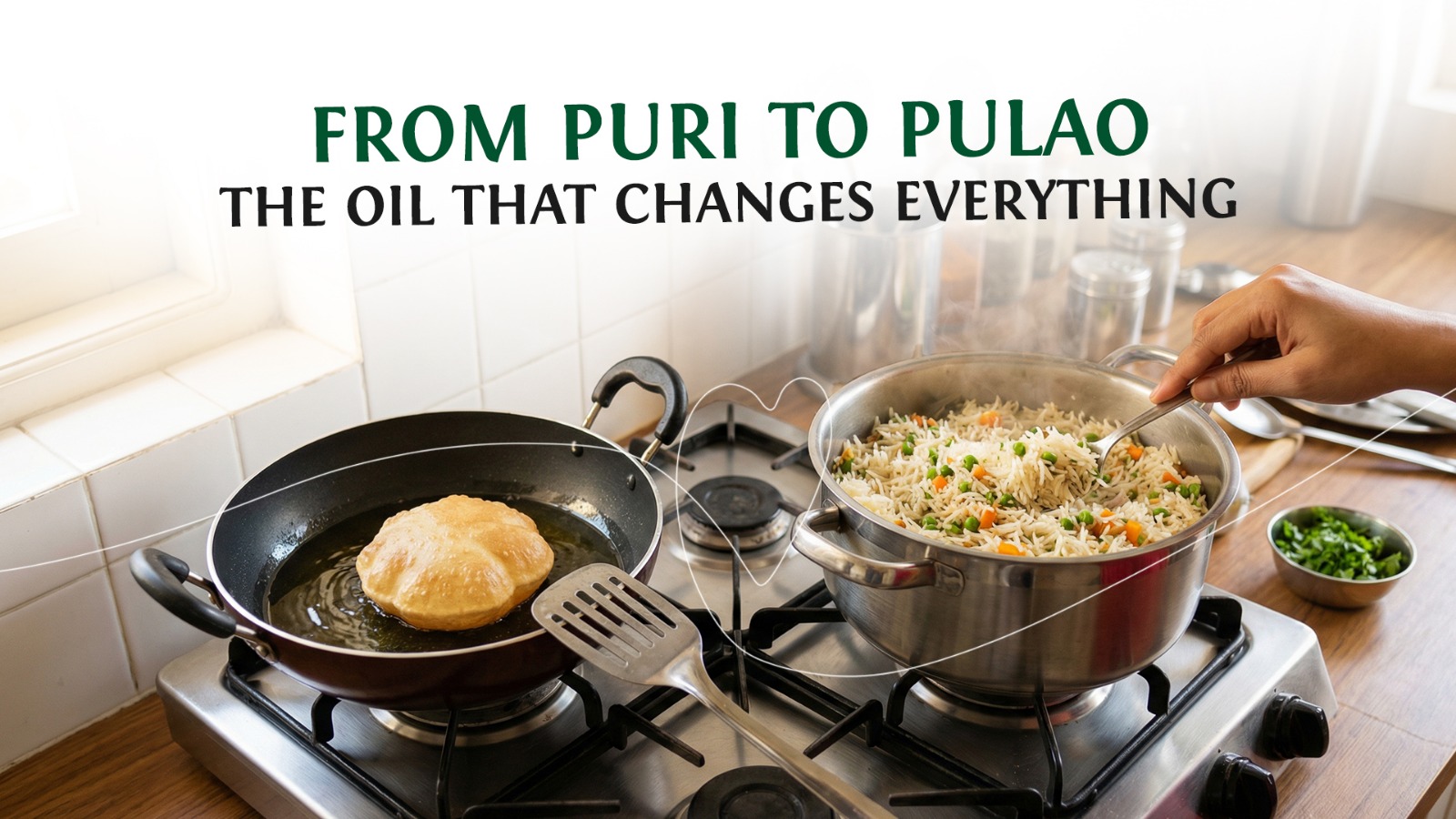
Indian food has never been short on flavour. From festive puris to everyday pulao, our meals are layered with spices, textures, and aromas that feel familiar and comforting.
Yet many home cooks notice the same thing –
Some meals feel heavier than expected, even when the recipe hasn’t changed.
Often, it isn’t the food.
It’s the oil behaviour during cooking.
That’s why more kitchens are paying attention to how an oil performs, not just what it’s called.
Indian recipes are demanding. They involve high heat, tempering, shallow frying, deep frying, and long cooking times – sometimes all in the same meal.
A cooking oil that fits into this routine should:
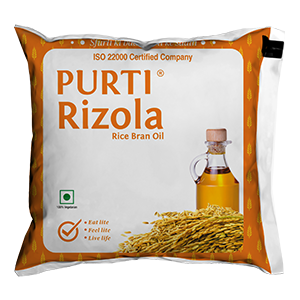
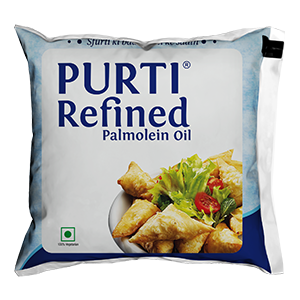
A cholesterol-free, plant-based cooking oil is often chosen for this reason – not to change recipes, but to let them cook the way they’re intended to.
Without making dramatic claims, the right oil quietly supports the cooking process:
The result isn’t a new taste – it’s a cleaner cooking experience.
Certain Indian dishes benefit especially from oils that stay in the background:
These are not special-occasion foods – they’re the meals we return to week after week.
Indian kitchens have always respected ghee, butter, and coconut oil – and that hasn’t changed.
Many cooks prefer to:
Using a cholesterol-free oil for base cooking, and traditional fats for finishing or flavour, is a practical approach many households follow – without giving up taste.
When the oil stays neutral, the food speaks louder.
Video Link: https://youtu.be/z5pxhdaX4lA
In the next edition of 52 Weeks to a Healthier Kitchen, we’ll explore how households can build a simple, long-term oil routine that works across age groups, cooking styles, and meal frequencies – without complicating everyday cooking.
This blog is for general food awareness and cooking-related information only. It is not intended as medical or nutritional advice. Consumers should always refer to the product label for ingredient and nutritional information. All statements comply with the Food Safety and Standards (Advertising & Claims) Regulations, 2018.


Our commitment to quality is supported by the state-of-art infrastructure, its relationship with the buyers and modern production facilities.
Our Company pursues a single goal - completely focussed on th quality of the product.
© copyright, Purti Vanaspati Pvt. Ltd. All Rights Reserved.