In every Indian kitchen, cooking oil is more than just an ingredient. It is the starting point of countless meals – the gentle crackle of mustard seeds in a pan, the aroma of vegetables sautéing slowly, and the comfort of familiar flavours that bring families together.
Because we use cooking oil almost every day, the quality and authenticity of the oil we buy matter deeply. Yet many consumers rarely pause to ask an important question:
How do we know what is actually inside the bottle?
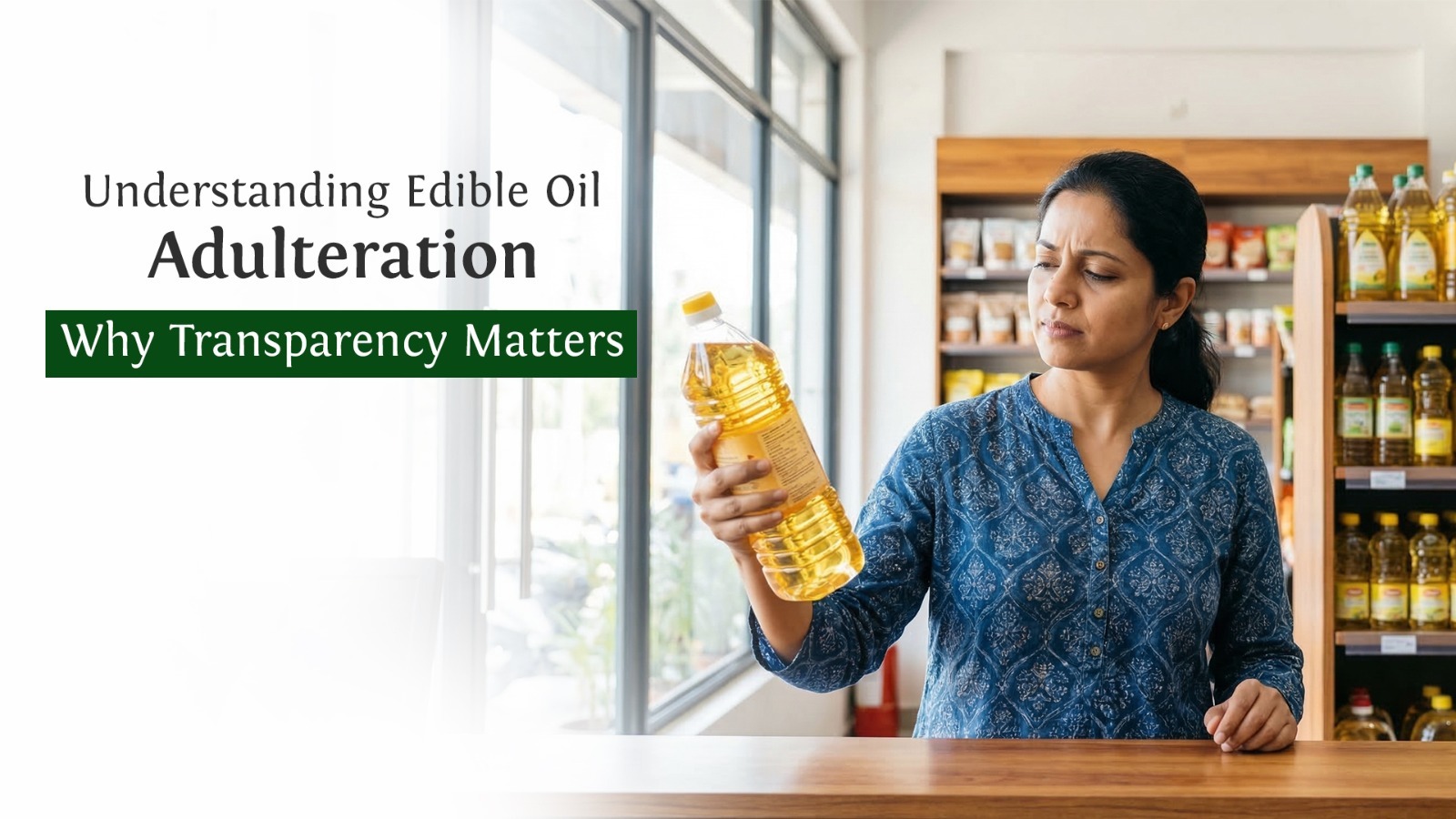
In recent years, the conversation around edible oil adulteration has become more important than ever. Awareness helps consumers make informed decisions, read labels carefully, and choose products from reliable sources.
As part of the “52 Weeks to a Healthier Kitchen” series, this week we explore what edible oil adulteration means, why transparency is essential in the food industry, and how consumers can make more confident choices when buying cooking oil.
What Is Oil Adulteration?
Adulteration in edible oils generally refers to the addition or substitution of substances that are not expected in the product, or the misrepresentation of the oil’s composition.
This can occur in different ways within the broader food supply chain. Sometimes it involves mixing lower-cost oils without proper disclosure, while in other situations it may involve altering the oil’s appearance or characteristics.
It is important to understand that food products should always comply with regulatory standards set by authorities such as the Food Safety and Standards Authority of India, which require clear labelling, quality standards, and transparency in manufacturing practices.
For consumers, awareness is the first step toward identifying reliable products and making better decisions in the kitchen.
Common Examples of Oil Adulteration
Different types of adulteration have been discussed in food safety reports and consumer awareness programs over the years. Some commonly mentioned examples include:
Undeclared Blending
In some cases, different edible oils may be blended without proper labelling or declaration. Regulatory guidelines require that blends must be clearly stated on the packaging so consumers know exactly what they are buying.
Use of Non-Edible Substances
Food safety authorities strictly prohibit the presence of non-edible materials in cooking oils. Responsible manufacturers must ensure that raw materials and processing steps follow approved standards.
Artificial Colour or Aroma
Occasionally, certain products may attempt to imitate the look or smell of premium oils through artificial means. However, proper labelling and quality checks help ensure authenticity.
Misleading Packaging or Labelling
Sometimes the issue may not be with the oil itself but with incomplete or unclear labelling, which can confuse consumers.
These examples highlight why consumer awareness and transparent manufacturing practices are essential in the edible oil industry.
How Consumers Can Make Smarter Choices
Buying cooking oil should not feel complicated. In fact, a few simple habits can help consumers make more informed choices:
Look for essential information on the pack, including:
Clear labelling reflects compliance with regulatory requirements.
Buying from trusted retailers and established brands can help reduce uncertainty about product quality.
Ensure that the bottle or pouch is properly sealed and undamaged.
If a product’s price seems significantly lower than that of similar products, it may be worth verifying the details on the packaging before purchasing.
These simple steps can help households become more aware and confident consumers.
The Role of Quality Processes in the Edible Oil Industry
Responsible edible oil manufacturers generally follow structured quality processes during production and packaging. These processes often include:
Quality Testing
Many facilities conduct laboratory checks to ensure the product meets defined standards.
Standardised Production Practices
Manufacturers are expected to follow established food safety protocols during processing.
Traceability of Raw Materials
Maintaining records of sourcing and production helps ensure accountability across the supply chain.
Transparent Labeling
Clear product information helps consumers understand what they are buying.
Such processes are important for maintaining consumer trust and regulatory compliance in the food industry.
Tradition and Balance in the Indian Kitchen
Indian cuisine has always embraced a wide variety of fats and oils. Ingredients like ghee, butter, mustard oil, and coconut oil have long held cultural and culinary importance across different regions.
Each type of fat has its own traditional uses and flavour profiles.
Rather than comparing them, it is helpful to think about cooking oils in terms of appropriate use, moderation, and informed selection.
For everyday cooking, households often choose oils that match their regional preferences, cooking style, and taste.
Understanding the source and composition of the oil is often just as important as the type of oil itself.
Tip of the Week
“Transparency is one of the simplest ways to build trust in the kitchen.”
Taking a moment to read labels, check product details, and buy from reliable sources can help ensure greater confidence in the cooking ingredients we use every day.
Food awareness is an ongoing journey. Each week in this series, we explore a different aspect of cooking oils and kitchen habits to help consumers make informed decisions.
Video Link: https://youtu.be/1qUSPlnnUGE
Coming Up Next Week
In Week 32, we explore another interesting question:
How often should you change the type of cooking oil you use in your kitchen?
Stay tuned as we continue the journey toward a more informed and mindful kitchen.
Disclaimer
This article is intended for general consumer awareness only.
It is not intended to provide medical or nutritional advice.
For health-related dietary guidance, please consult a qualified healthcare professional or nutritionist.
All information presented follows the principles outlined in the Food Safety and Standards (Advertising and Claims) Regulations, 2018 under the regulatory framework of the Food Safety and Standards Authority of India.

Our commitment to quality is supported by the state-of-art infrastructure, its relationship with the buyers and modern production facilities.
Our Company pursues a single goal - completely focussed on th quality of the product.
© copyright, Purti Vanaspati Pvt. Ltd. All Rights Reserved.