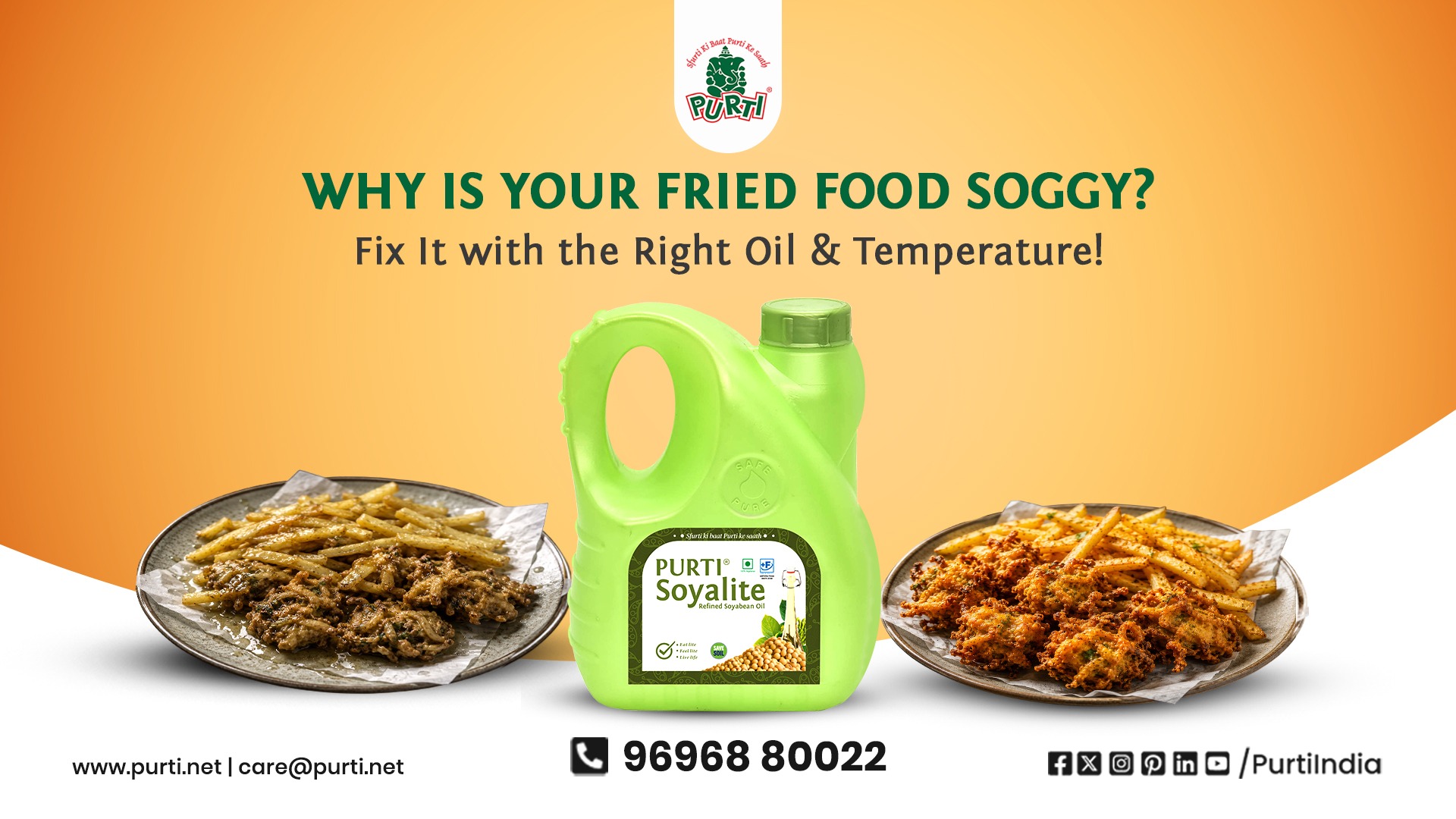
There’s nothing more disappointing than biting into what should be a crispy snack, only to find it soft, oily, and soggy. Whether it’s pakoras, fries, or puris, achieving that perfect crunch is not just about the recipe. It’s about understanding the science behind frying.
Many home cooks unknowingly make small mistakes that ruin the texture of their food. From choosing the wrong oil to frying at the wrong temperature, these factors directly impact the crispiness. In this blog, we’ll break down the “why” behind soggy fried food and share crispy frying secrets using Purti Soyalite Refined Soybean Oil, so you can elevate your everyday cooking.
To master crispy frying, it’s important to first understand what goes wrong. When food is fried, the moisture inside it turns into steam and escapes, creating that light and crispy texture. However, if the oil temperature is incorrect, the food absorbs excess oil instead of releasing moisture. This is why your snacks end up greasy instead of crispy.
Common Causes of Soggy Fried Food:
These mistakes may seem minor, but they play a huge role in the final result.
One of the most important factors in achieving crispiness is maintaining the right oil temperature for frying. If the oil is too cool, food absorbs more oil and becomes soggy. If it’s too hot, the outside burns while the inside remains undercooked.
Ideal Temperature Range:
At this range, food cooks evenly and develops a golden, crispy texture.
Simple Kitchen Tip:
Drop a small piece of batter into the oil:
Using a reliable oil like Purti Soyalite ensures stable heating, which helps maintain consistent frying temperatures.
Not all oils are created equal, especially when it comes to frying. The best oil for crispy frying should have:
This is where refined soybean oil stands out.
Why Choose Purti Soyalite Refined Soybean Oil?
Using the right oil type for frying directly impacts the crunch, taste, and health factor of your food.
Even before your food hits the oil, preparation plays a big role in achieving that perfect crisp.
Key Preparation Tips:
These small adjustments can dramatically improve your frying results.
One of the most common mistakes is adding too many items into the pan at once.
When you are overcrowded:
Pro Tip:
Fry in small batches to maintain the best frying temperature and ensure even cooking.
Using a stable oil like Purti Soyalite helps recover temperature quickly, making batch frying more efficient.
Perfect frying is not just about ingredients; it’s also about technique.
Follow These Techniques:
These kitchen tips for crispy frying can instantly upgrade your cooking game.
Even after frying, how you handle the food matters.
Do This:
Stacking hot food creates steam, which softens the outer layer, one of the biggest reasons behind soggy results.
Reusing oil is common, but it must be done carefully.
Tips for Reusing Oil:
High-quality oils like Purti Soyalite Refined Soybean Oil retain stability better, making them a reliable choice for repeated cooking (when handled properly).
Following this checklist ensures consistently crispy results every time.
Crispy fried food isn’t about luck; it’s about the right combination of temperature, oil, and technique.
By understanding the causes of sogginess and applying these practical tips, you can transform your cooking instantly. Choosing the right oil type, especially a trusted option like Purti Soyalite Refined Soybean Oil, ensures better texture, taste, and overall cooking performance.
So the next time you step into the kitchen, remember: the secret to crispy perfection lies in the details. Make every bite crunchy, delicious, and satisfying with the right approach and the right oil.
1. Why does my fried food lose its crispiness so quickly after cooking?
Fried food usually loses its crispiness when excess moisture gets trapped after frying. This can happen if the oil temperature is too low, causing the food to absorb oil instead of releasing steam. Covering hot fried food or stacking it also creates steam, making it soggy. To fix this, always fry at the right temperature and place food on a wire rack instead of piling it up.
2. What is the best oil temperature for deep frying snacks at home?
The ideal temperature for frying snacks is between 160°C to a maximum of 180°C. This range ensures the outer layer becomes crispy while the inside cooks properly. If the oil is too cold, the food absorbs more oil; if it’s too hot, it burns quickly. Maintaining the perfect heat is key to achieving crunchy results every time.
3. How can I keep fried food crispy for a longer time at home?
To keep fried food crispy for longer, avoid covering it immediately after frying, as trapped steam softens the texture. Drain excess oil using paper towels or a wire rack, and fry in small batches to maintain oil temperature. Using the right oil and proper frying techniques also helps retain crispiness for a longer duration.

Our commitment to quality is supported by the state-of-art infrastructure, its relationship with the buyers and modern production facilities.
Our Company pursues a single goal - completely focussed on th quality of the product.
© copyright, Purti Vanaspati Pvt. Ltd. All Rights Reserved.