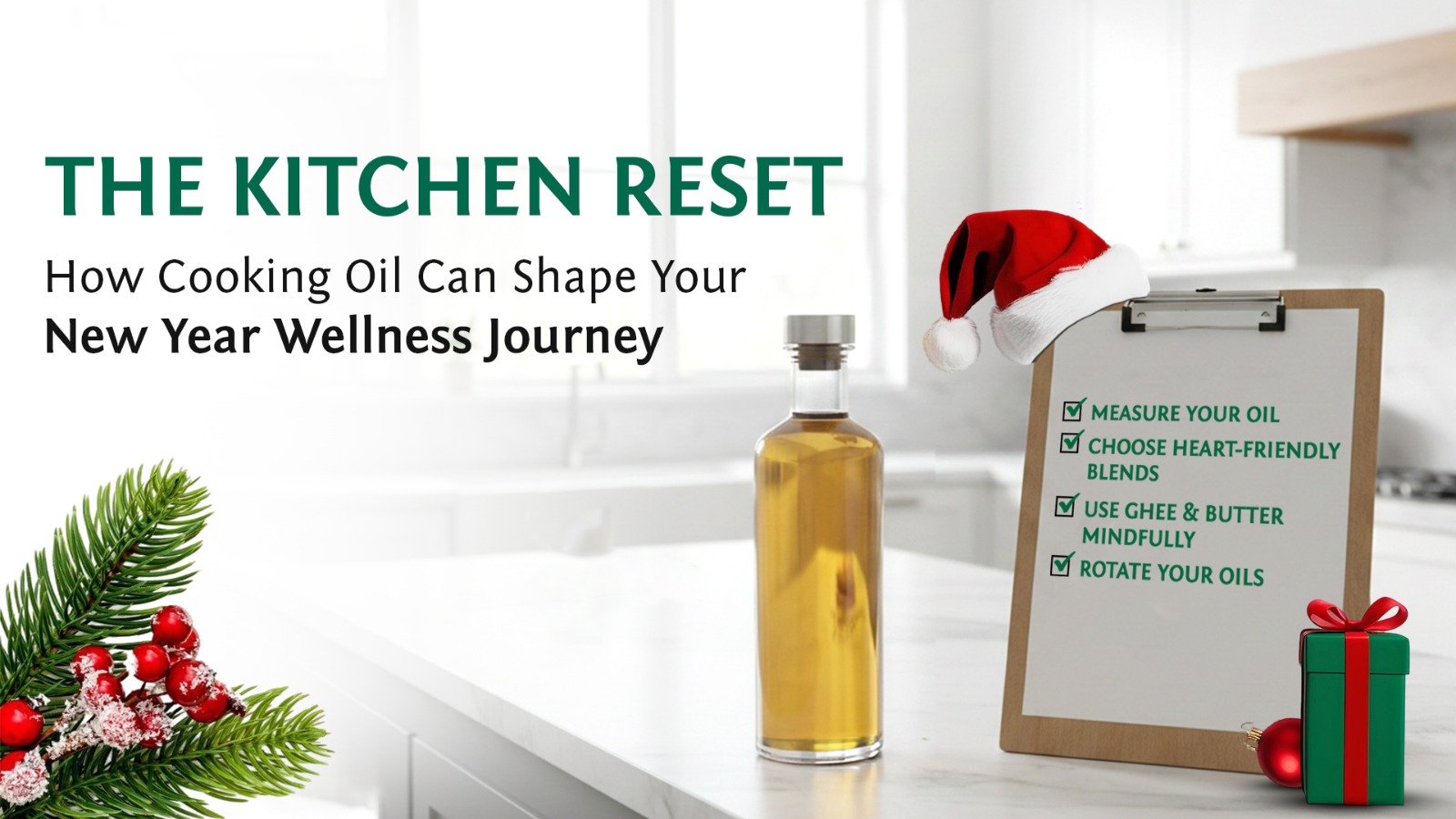
Cooking Oil and New Year Wellness Resolutions. A Fresh Start Begins in Your Kitchen.
Every New Year comes with a wave of motivation. We start planning to eat clean, move more, lose weight, reduce cholesterol, or simply take better care of ourselves and our families. While most wellness plans focus on big lifestyle changes, true progress often begins with small, daily habits – especially those inside the kitchen.
And among all ingredients we use every day, cooking oil plays a surprisingly powerful role in shaping our wellness. From the tadka on your dals to shallow-frying vegetables or preparing Sunday snack-time favourites – the oil you pick and how you use it can directly influence your heart health, energy levels, and long-term fitness.
So, as you enter the New Year with a renewed focus on wellness, start with the simplest step:
Choose a better, smarter, heart-friendly cooking oil.
Why Cooking Oil Should Be a Key Part of Your Wellness Plan
Cooking oil isn’t just another ingredient – it’s a calorie-dense, health-impacting component of every Indian meal. And yet, it’s often ignored.
Here’s why it needs your attention:
Switching to a cholesterol-free, low-saturated-fat, heart-smart oil is one of the simplest yet most impactful decisions you can make for a healthier New Year.
New Year Wellness Starts with Better Oil Habits
To build a sustainable wellness routine, here are some of the most effective kitchen-friendly habits:
Look for oils that offer balanced nutrition and support heart health:
Blended oils are excellent for everyday Indian cooking – whether you’re preparing tadka, sautéed vegetables, or shallow-fried dishes. Their balanced composition supports heart health and helps maintain energy without making meals heavy.
One of the biggest wellness mistakes is assuming oil quantity “by eye.”
This year, make portion control your top habit:
This simple step supports weight management, balanced calorie intake, and better heart health – without compromising taste.
Just like your meals change, your oils should too.
Different oils offer different health benefits:
Rotating oils ensures your body receives a wide spectrum of essential fatty acids, making your diet naturally balanced throughout the month.
Indian kitchens have always embraced flavorful fats like ghee, butter, and coconut oil.
These are not the enemy — moderation is key.
Traditional fats can absolutely be part of a heart-friendly lifestyle when used mindfully, not excessively.
FSSAI-Compliant Wellness Practices for Oils
To keep your wellness resolutions safe, smart, and lawful, follow these FSSAI-aligned guidelines:
✔ Check the FSSAI License Number
Always buy oils from brands that display a valid FSSAI license number on the packaging.
✔ Avoid Reusing Oil
Repeatedly reheating oil increases harmful compounds.
Safely discard oil after one use, especially deep-frying oil.
✔ Store Oil Properly
Keep cooking oil away from sunlight and heat.
Use clean, dry containers to avoid contamination.
✔ Choose Oils with Proper Labelling
Check:
✔ Consume in Moderation
Even the best oil becomes unhealthy when used excessively.
Balance is essential.
These steps ensure that your oil usage supports safe, hygienic, and heart-friendly cooking.
Wellness Begins with Awareness
This New Year, let your kitchen be the place where your wellness resolutions truly take shape.
Smart oil choices influence:
Small changes – like switching oil, measuring daily portions, and choosing cleaner, safer cooking practices – can lead to big improvements in your long-term health.
Tip of the Week
“Small steps like switching oil and measuring it daily can create long-term wellness.”
Video Link: https://youtu.be/sz4Bb1ajM1o
Coming Up Next Week
Why switching to a cholesterol-free, heart-smart oil is one of the most powerful steps toward better health.
Disclaimer:
This blog is only for general awareness. It is not a substitute for medical advice. Please consult your doctor or nutritionist for guidance related to your health and diet. All claims and nutritional references comply with the ‘Food Safety and Standards (Advertising and Claims) Regulations, 2018’. Always use cooking oils in moderate quantities and follow a balanced lifestyle.


Our commitment to quality is supported by the state-of-art infrastructure, its relationship with the buyers and modern production facilities.
Our Company pursues a single goal - completely focussed on th quality of the product.
© copyright, Purti Vanaspati Pvt. Ltd. All Rights Reserved.