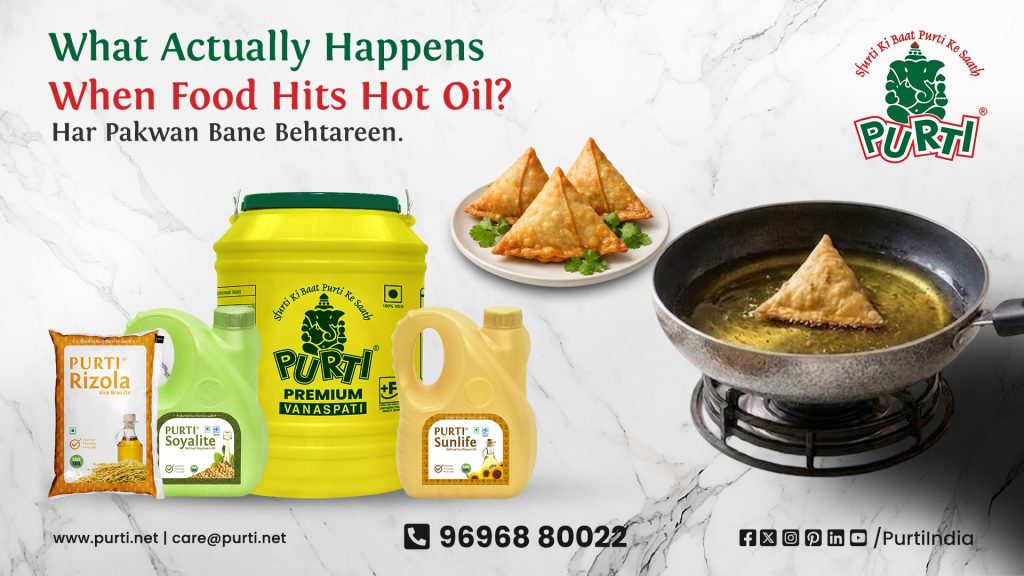
That familiar ssssss! is one of the most recognisable sounds in an Indian kitchen.
Many foods contain water. When a moist food item comes into contact with sufficiently hot oil, heat causes water near the surface to turn into steam. As that steam escapes, bubbles form around the food, producing the sizzling sound.
At the same time, heat moves from the oil into the food.
The intensity of the sizzling can vary depending on the food’s moisture content, surface area and temperature when it enters the oil.
So the sound isn’t simply a sign that the oil is “angry” it is evidence of moisture interacting with intense heat.
Crispiness is mainly a surface story.
As frying continues, the outer layer of the food undergoes physical and structural changes. Moisture is reduced from the surface, while ingredients such as flour and starch can form a firmer outer layer.
This is particularly noticeable in foods such as:
The centre and exterior can develop very different textures. While the outer layer becomes firmer, the inside may retain more moisture.
That contrast is what gives many fried foods their familiar crisp-outside, softer-inside texture.
The golden-brown colour of fried food comes from heat-driven chemical changes at the surface.
One important process is the Maillard reaction.
The Maillard reaction describes a group of chemical reactions involving certain amino acids and reducing sugars when food is heated. It contributes to the colour, aroma and flavour associated with many cooked foods.
Another process, caramelisation, can contribute to browning when sugars are exposed to sufficient heat.
These reactions help explain why a pale batter or coating can gradually develop a deeper golden appearance and a more pronounced cooked aroma.
So when a pakora changes from pale to golden, the colour is telling you that heat has transformed its surface chemistry.
Temperature determines how quickly different parts of the cooking process take place.
If the oil is not sufficiently hot, food may take longer to cook and its exterior may not develop the intended texture as efficiently.
If the oil becomes excessively hot, the outside can brown rapidly while the centre still needs additional cooking time.
The appropriate temperature depends on the food, its size, moisture content, coating and cooking method.
For home cooking, the practical takeaway is straightforward:
Use the temperature recommended by the recipe when available, and avoid treating maximum heat as a shortcut to faster frying.
Put a potato slice, pakora and samosa into the same pan and they won’t cook in exactly the same way.
The reason is their physical structure.
Thickness: Thicker foods generally require more time for heat to reach the centre.
Shape: Irregular shapes can have areas that brown faster than others.
Coating: Batter, flour or crumbs create an additional outer layer that changes the cooking process.
Surface area: A larger exposed surface changes how the food interacts with the surrounding oil.
Ingredients: Different combinations of starches, proteins, sugars and moisture respond differently to heat.
This is why there isn’t one universal frying time that works equally well for every food.
The amount of oil remaining on the surface of fried food can be affected by several cooking and food-related factors.
These can include:
The way food is removed from the pan can also make a difference to its surface.
Using a suitable strainer, rack or absorbent kitchen paper after frying can help remove excess surface oil before serving.
Once the food is in the pan, a few simple habits can make the process easier to manage.
Use the recommended temperature where the recipe provides one instead of automatically choosing the highest heat.
Avoid overcrowding the pan so the food has enough room for more even cooking.
Water can cause hot oil to splatter. Pat ingredients dry where appropriate and introduce food carefully.
Use a suitable strainer, rack or absorbent kitchen paper to remove excess surface oil before serving.
Repeated heating can cause changes in the characteristics of cooking oil. Avoid making repeated frying with the same oil a routine kitchen practice.
Frying is a combination of heat, moisture, time, food structure and surface chemistry.
The sizzle comes from moisture turning into steam. Crispness develops through changes at the food’s surface. Golden colour and cooked aromas are influenced by heat-driven reactions.
Understanding these simple principles can make everyday frying feel less mysterious and help you make more informed choices in the kitchen.
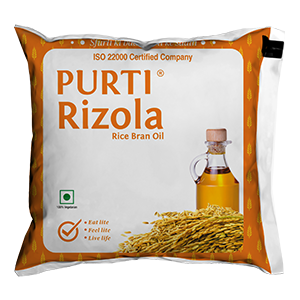
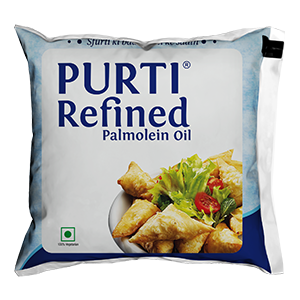
Purti Vanaspati Pvt. Ltd. offers a range of edible oils and cooking products for everyday kitchen use.
Visit www.purti.net to explore the Purti product range
Our commitment to quality is supported by the state-of-art infrastructure, its relationship with the buyers and modern production facilities.
Our Company pursues a single goal - completely focussed on th quality of the product.
© copyright, Purti Vanaspati Pvt. Ltd. All Rights Reserved.