In Indian kitchens, mustard oil has always held a special place. From Bengali fish curries to North Indian pickles and everyday vegetable preparations, the bold aroma and distinctive flavour of mustard oil continue to define traditional cooking across generations.
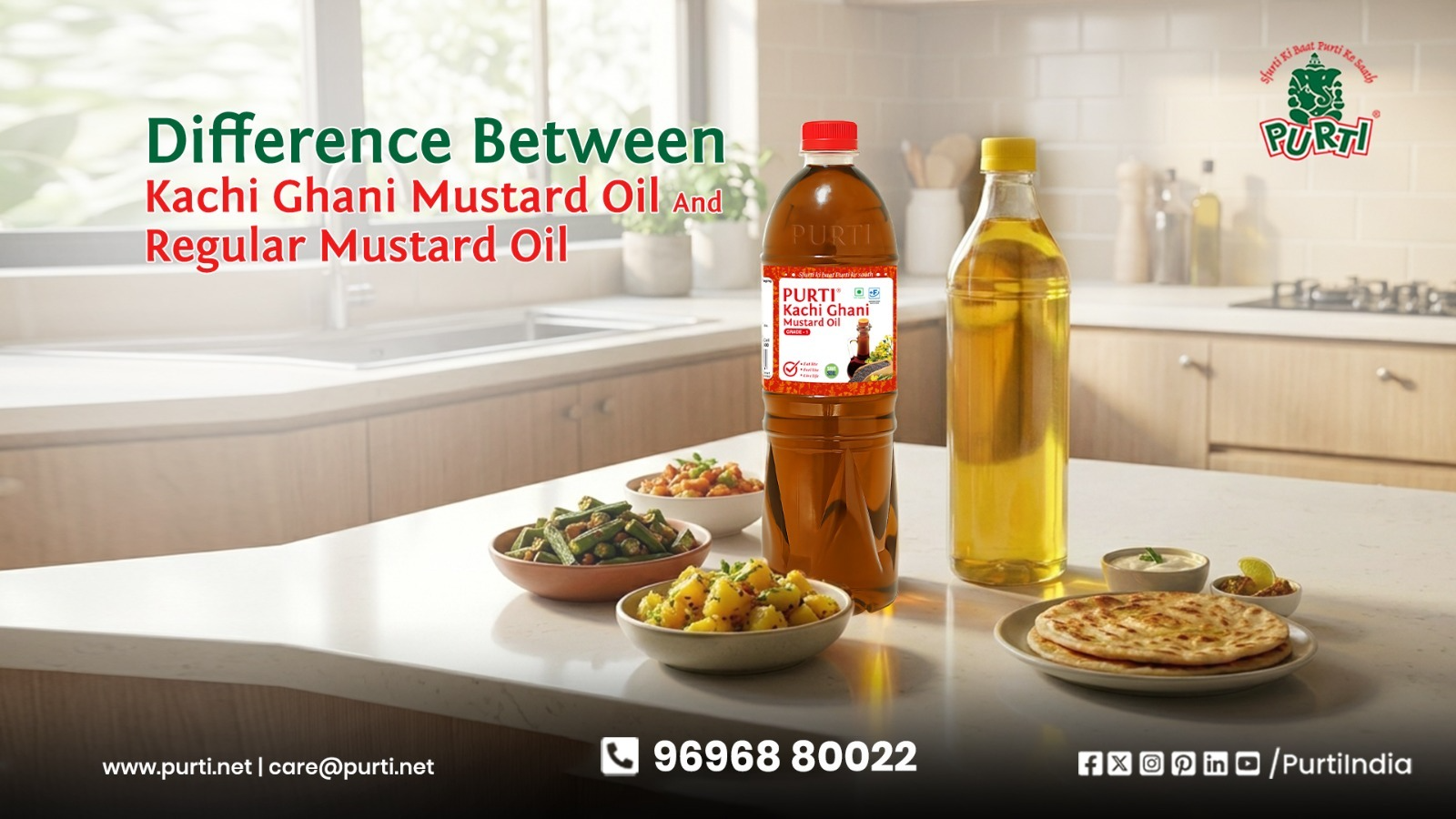
However, many consumers today often ask an important question: What exactly is the difference between Kachi Ghani Mustard Oil and regular mustard oil? While both originate from mustard seeds, their extraction methods, aroma, texture, and usage can differ significantly.
With growing interest in traditional cooking techniques and authentic flavours, products like Purti Kachi Ghani Mustard Oil have become increasingly popular among modern households looking for both familiarity and quality in everyday cooking.
Kachi Ghani Mustard Oil refers to mustard oil extracted using a traditional cold-pressing technique. In this method, mustard seeds are mechanically pressed at controlled temperatures to extract oil while preserving the natural aroma and flavour of the seeds.
The term “Kachi Ghani” itself refers to the wooden or mechanical pressing process traditionally used in India for oil extraction.
This type of oil is widely used in:
Its strong aroma and rich texture make it a preferred choice for recipes that rely heavily on authentic flavour.
Regular mustard oil may go through additional refining and processing methods after extraction. Depending on the manufacturing process, the oil may have:
Some refined mustard oils are designed for neutral flavour cooking styles, while Kachi Ghani oil is often preferred for traditional regional recipes where aroma and taste are important.
Understanding how mustard oil is produced helps explain the differences in taste, aroma, and cooking experience.
1. Kachi Ghani Extraction Method
In the Kachi Ghani process, mustard seeds are slowly pressed to extract oil naturally. The process focuses on retaining the original character of the mustard seeds.
Features:
Brands like Purti Kachi Ghani Mustard Oil focus on maintaining this authentic taste experience that many Indian households prefer.
2. Refining Technique In Regular Mustard Oil
In refined mustard oil production, extracted oil may undergo:
These processes can create a lighter and more neutral oil suitable for different cooking styles. However, the aroma and pungency associated with traditional mustard oil may become milder.
Kachi Ghani Mustard Oil
Regular Mustard Oil
In recent years, there has been a growing shift toward traditional and regional food experiences. Consumers are increasingly exploring:
This renewed interest has made best Kachi Ghani mustard oil for cooking a highly searched topic online.
Today’s younger generation is also experimenting with:
As a result, mustard oil for Indian cooking continues to remain highly relevant in contemporary kitchens.
Many households prefer Kachi Ghani mustard oil because of these:
It is especially popular in recipes like these:
The boldness of authentic mustard oil often becomes the defining flavour element in these dishes.
For families looking for traditional flavour and reliable quality, Purti has built a strong presence in Indian kitchens through its range of cooking oils and food products.
Purti Kachi Ghani Mustard Oil is known for these following aspects:
Whether it is traditional Bengali cuisine or simple homemade meals, Purti continues to connect with consumers who value authentic cooking experiences.
Using Kachi Ghani mustard oil in recipes can help create:
It works especially well in:
Modern kitchens are now using mustard oil recipes beyond traditional curries. Today, mustard oil is also used in:
This blend of traditional ingredients and modern usage has helped increase the popularity of cold pressed mustard oil among younger consumers.
The difference between Kachi Ghani Mustard Oil and regular mustard oil lies largely in the extraction process, flavour intensity, aroma, and cooking experience. While regular mustard oil may suit neutral cooking styles, Kachi Ghani oil continues to stand out for its authentic taste and strong regional identity.
As more people return to traditional recipes and flavour-rich cooking, products like Purti Kachi Ghani Mustard Oil continue to remain trusted kitchen companions for families across India. Whether used in classic Bengali dishes or modern fusion recipes, its bold flavour and familiar aroma help bring authenticity to everyday cooking.
1. What is the difference between Kachi Ghani mustard oil and regular mustard oil?
Kachi Ghani mustard oil is traditionally cold-pressed for a stronger aroma and richer flavour, while regular mustard oil may undergo additional refining processes.
2. Why is Kachi Ghani mustard oil popular in India?
Kachi Ghani mustard oil remains popular because of its deep connection with traditional Indian cooking, regional recipes, and authentic flavour preferences.
3. Which is the best mustard oil for Bengali cooking?
Many traditional Bengali recipes prefer Kachi Ghani mustard oil because its bold aroma and pungent flavour complement fish curries, bhajas, and mustard-based dishes well.
Our commitment to quality is supported by the state-of-art infrastructure, its relationship with the buyers and modern production facilities.
Our Company pursues a single goal - completely focussed on th quality of the product.
© copyright, Purti Vanaspati Pvt. Ltd. All Rights Reserved.